

Rising Electricity Cost Per kWh: How to Save on Your Energy Bill
Cost of power by kWh in South Africa has been on the rise over the years, affecting everyone – whether you rent a home, own a home and or run a business.
We’ll break down the current electricity price per kWh and what factors come into play. We also share with you valid information of how to save on your annual bill.
Rising Electricity Cost Per kWh: How to Save on Your Energy Bill
Cost of power by kWh in South Africa has been on the rise over the years, affecting everyone – whether you rent a home, own a home and or run a business.
We’ll break down the current electricity price per kWh and what factors come into play. We also share with you valid information of how to save on your annual bill.
Noticeable Rising Electricity Bill?
Current Electricity Tariffs per kWh in South Africa
Electricity cost per unit kWh varies significantly depending on where you live, whether you receive electricity directly from Eskom or your municipality, the type of meter you have, and your specific usage patterns. But currently, the electricity cost for residential consumers typically ranges from R2.10 to R4.60 per kWh or more.
Later, we’ll show you of how to get clever about it and save. Here’s a simple breakdown of how the tariffs are structured:
Noticeable Rising Electricity Bill?
Current Electricity Tariffs per kWh in South Africa
Electricity cost per unit kWh varies significantly depending on where you live, whether you receive electricity directly from Eskom or your municipality, the type of meter you have, and your specific usage patterns. But currently, the electricity cost for residential consumers typically ranges from R2.10 to R4.60 per kWh or more.
Later, we’ll show you of how to get clever about it and save. Here’s a simple breakdown of how the tarriffs are structured:
Eskom Tariff Increases
As per the National Energy Regulator of South Africa (Nersa)
As per the National Energy Regulator of South Africa (Nersa)’s approval, the current 2024/25 electricity cost per kWh in South Africa had been raised under these changes:
Eskom Tariff Increases
As per the National Energy Regulator of South Africa (Nersa)
As per the National Energy Regulator of South Africa (Nersa)’s approval, the current 2024/25 electricity cost per kWh in South Africa had been raised under these changes:
Here’s a breakdown of the cost of electricity in South Africa after this increase, according to Eskom:
Homelight Tariffs (No guaranteed rates at time of research)
This applies to low-usage residential customers who get their electricity directly from Eskom. It includes the lower Homelight 20A and the higher Homelight 60A power capacities.
| Homelight Tariff | Block 1 | Block 2 |
| Homelight 20A | R2.19 per kWh (0 – 350 kWh) | R2.48 per kWh (Above 350 kWh) |
| Homelight 60A | R2.67 per kWh (0 – 600 kWh) | R4.54 per kWh (Above 600 kWh) |
Example: If you use 400 kWh in a month, you’ll pay the Block 1 rate for the first 350 kWh, and the Block 2 rate for the remaining 50 kWh.
Here’s a breakdown of the cost of electricity in South Africa after this increase, according to Eskom:
Homelight Tariffs (No guaranteed rates at time of research)
This applies to low-usage residential customers who get their electricity directly from Eskom. It includes the lower Homelight 20A and the higher Homelight 60A power capacities.
| Homelight Tariff | Block 1 | Block 2 |
| Homelight 20A | R2.19 per kWh (0 – 350 kWh) | R2.48 per kWh (Above 350 kWh) |
| Homelight 60A | R2.67 per kWh (0 – 600 kWh) | R4.54 per kWh (Above 600 kWh) |
Example: If you use 400 kWh in a month, you’ll pay the Block 1 rate for the first 350 kWh, and the Block 2 rate for the remaining 50 kWh.
Homelight Tariffs (No guaranteed rates at time of research)
These are designed for prepaid electricity customers who get their electricity directly from Eskom. Requires a smart Homeflex meter that allows them to purchase electricity in increments as needed. Homeflex operates with time-of-use pricing:
| Homeflex Tariff | Peak | Standard | Off-Peak |
| High Demand Season (Jun – Aug) | R7.04 per kWh | R2.14 per kWh | R1.02 per kWh |
| Low Demand Season (Sep – May) | R2.00 per kWh | R2.30 per kWh | R1.59 per kWh |
Homelight Tariffs (No guaranteed rates at time of research)
These are designed for prepaid electricity customers who get their electricity directly from Eskom. Requires a smart Homeflex meter that allows them to purchase electricity in increments as needed. Homeflex operates with time-of-use pricing:
| Homeflex Tariff | Peak | Standard | Off-Peak |
| High Demand Season (Jun – Aug) | R7.04 per kWh | R2.14 per kWh | R1.02 per kWh |
| Low Demand Season (Sep – May) | R2.00 per kWh | R2.30 per kWh | R1.59 per kWh |
Homepower Standard Tariff
No Guaranteed Rates at Time of Research
A tariff for high consuming electricity demand (e.g., larger homes, Estates or commercial properties).
| Homepower (Non-Local) | Block 1 (0-600 kWh) | Block 2 (above 600 kWh) |
| Homepower 1 | R2.82 per kWh | R4.46 per kWh |
| Homepower 2 | R4.35 per kWh | |
| Homepower 3 | R435 per kWh | |
| Homepower 4 | R4.54 per kWh | |
| Homepower (Local) | Block 1 (0-600 kWh) | Block 2 (above 600 kWh) |
| Homepower 1 | R2.86 per kWh | R4.51 per kWh |
| Homepower 2 | R4.40 per kWh | |
| Homepower 3 | R4.40 per kWh | |
| Homepower 4 | R4.60 per kWh |
Homepower Standard Tariff
No Guaranteed Rates at Time of Research
A tariff for high consuming electricity demand (e.g., larger homes, Estates or commercial properties).
| Homepower (Non-Local) | Block 1 (0-600 kWh) | Block 2 (above 600 kWh) |
| Homepower 1 | R2.82 per kWh | R4.46 per kWh |
| Homepower 2 | R4.35 per kWh | |
| Homepower 3 | R435 per kWh | |
| Homepower 4 | R4.54 per kWh | |
| Homepower (Local) | Block 1 (0-600 kWh) | Block 2 (above 600 kWh) |
| Homepower 1 | R2.86 per kWh | R4.51 per kWh |
| Homepower 2 | R4.40 per kWh | |
| Homepower 3 | R4.40 per kWh | |
| Homepower 4 | R4.60 per kWh |
Municipal Tariffs, Example: Cape Town
As mentioned before, Electricity cost per kWh also varies based on your specific municipality.
In Cape Town, the residential tariff is structured across three main tiers:
Municipal Tariffs, Example: Cape Town
As mentioned before, Electricity cost per kWh also varies based on your specific municipality.
In Cape Town, the residential tariff is structured across three main tiers:
Clarity on Municipal Tariffs
Households or businesses getting their electricity through municipalities, tariffs are often higher and differintiate than those directly supplied by Eskom.
Municipalities tend to buy power in bulk from Eskom, marking it up to cover distribution costs.
How Can Consumers Reduce Electricity Costs? Here are some ways to cut down on your Monthly Bills:
1. Upgrade to Energy-Efficient Appliances. Or one of the most effective ways to reduce electricity costs is by investing in energy-efficient appliances, such as:
- A+ Grade Inverter air conditioners and fridges
- A+ grade washing machines and tumble dryers.
- A+ grade Air fryers, TVs, etc…
- LED bulbs (use up to 80% less electricity than incandescent bulbs).
In any case watch out for appliances with an A -rating of the South African Energy Efficiency Label ( SAEEL ), or EU / EC label, which means they use less power to perform the same functions.
Clarity on Municipal Tariffs
Households or businesses getting their electricity through municipalities, tariffs are often higher and differintiate than those directly supplied by Eskom.
Municipalities tend to buy power in bulk from Eskom, marking it up to cover distribution costs.
How Can Consumers Reduce Electricity Costs? Here are some ways to cut down on your Monthly Bills:
1. Upgrade to Energy-Efficient Appliances. Or one of the most effective ways to reduce electricity costs is by investing in energy-efficient appliances, such as:
- A+ Grade Inverter air conditioners and fridges
- A+ grade washing machines and tumble dryers.
- A+ grade Air fryers, TVs, etc…
- LED bulbs (use up to 80% less electricity than incandescent bulbs).
In any case watch out for appliances with an A -rating of the South African Energy Efficiency Label ( SAEEL ), or EU / EC label, which means they use less power to perform the same functions.
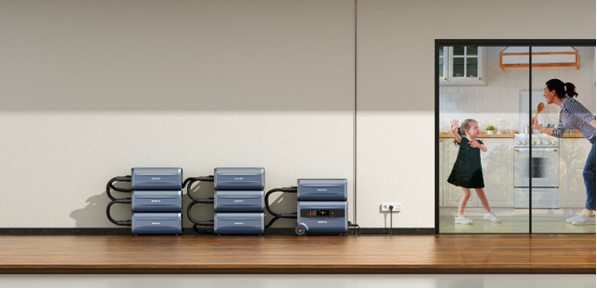
Solar Power Solutions by Runhood PLUG and PLAY
With double the amount of Sunshine compared to Europe, South Africa’s abundant sunshine makes solar power eco friendly PLUS a real cost-effective alternative.
-
Heavy duty power consuming appliances can easily be maintained with the Runhood F2400 in combination with battery storage B2400, expandable to 19.2KWH.
-
If you attach the F2400 to 3 x 555W solar panels for example it will reload in less than 2 hours with free „sun generated electricity“.
-
If you attach the F2400 to 3 x 555W solar panels for example it will reload in less than 2 hours with free „sun generated electricity“.
-
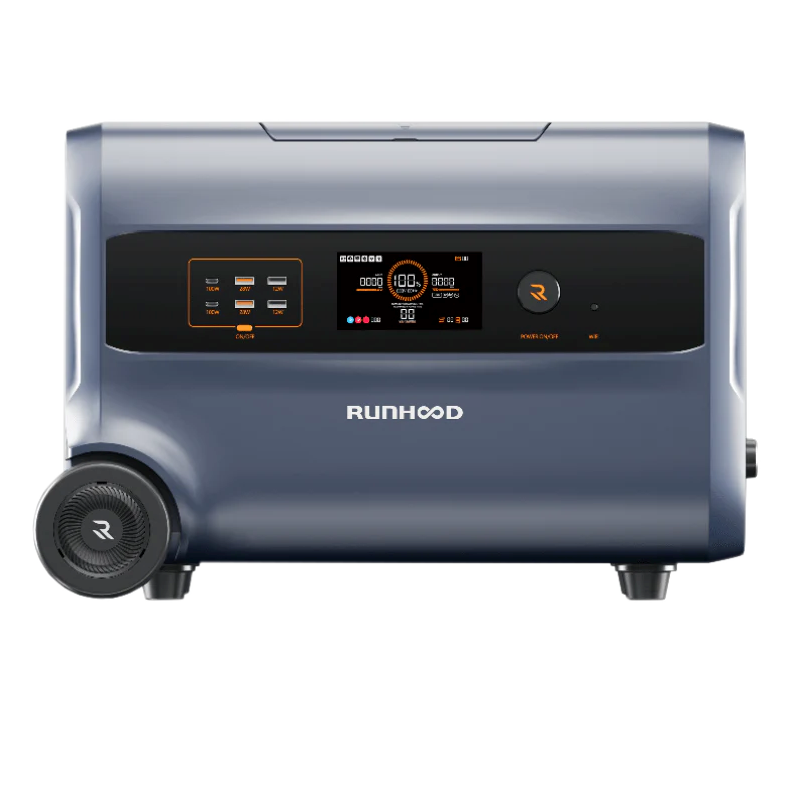
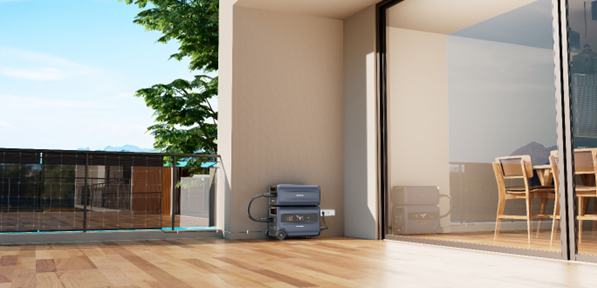
The Runhood F2400 is NOT just another portable power station. It’s intelligent and a 3 in 1 Balcony Power Station for your home, designed to SAVE on your bill.
-
Portability and flexibility out of home, when Glamping or work in remote areas is a mere add on and very nice to have. You can even take the main unit off the system whereas the B2400 batteries will keep running your via Smartplug assigned appliances whilst you enjoy outdoor power with the F2400 main unit.
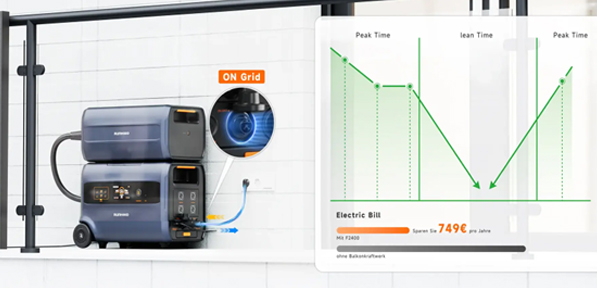
Take advantage of cheaper Electricity costs at night ! – save whilst sleeping –
In some areas of South Africa, electricity can be cheaper at night. This is due to Time-of-Use (ToU) tariffs offered by certain municipalities or Eskom. With ToU tariffs, electricity costs less during off-peak hours, usually at night or on weekends, when demand is lower.
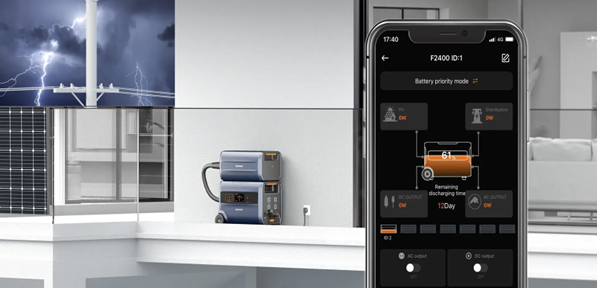
With RUNHOOD’s UNIQUE bidirectional storage technology, you can power your home with solar energy, earn money by sharing energy with the grid once available in South Africa, or charge the battery when electric prices are low (at night !) Homeowners can easily manage all of the functions with the RUNHOOD APP.
Intelligent Algorithm, BI-Directional Inverter & Smart Plug
RUNHOOD’s intelligent algorithm with the use of RUNHOOD smart plug can help homeowners achieve zero waste of power. SAVINGS of +20.000 Rand per year are possible if charged by Solar in combination with the Runhood Smartplug.
Set up the F2400 and smart plug with WIFI connection through the RUNHOOD App achieve on-demand power supply. In Self-Consumption mode, the F2400 tries to minimize the power import from the grid. Solar power generated by the balcony is first consumed by the home loads.
When excess solar power is available, it is used to charge the battery. If solar power is less than the home’ s power requirement, the F2400 battery is discharged to make up the deficit.
You can use up to 4 smart plugs per F2400 unit – driving power to up to 4 appliances at your finger tip via the Runhood App and save !
Solar Power Solutions by Runhood PLUG and PLAY
With double the amount of Sunshine compared to Europe, South Africa’s abundant sunshine makes solar power eco friendly PLUS a real cost-effective alternative.
- Heavy duty power consuming appliances can easily be maintained with the Runhood F2400 in combination with battery storage B2400, expandable to 19.2KWH.
- If you attach the F2400 to 3 x 555W solar panels for example it will reload in less than 2 hours with free „sun generated electricity“.
- If you attach the F2400 to 3 x 555W solar panels for example it will reload in less than 2 hours with free „sun generated electricity“.
- The Runhood F2400 is NOT just another portable power station. It’s intelligent and a 3 in 1 Balcony Power Station for your home, designed to SAVE on your bill.
- Portability and flexibility out of home, when Glamping or work in remote areas is a mere add on and very nice to have. You can even take the main unit off the system whereas the B2400 batteries will keep running your via Smartplug assigned appliances whilst you enjoy outdoor power with the F2400 main unit.
Take advantage of cheaper Electricity costs at night ! – save whilst sleeping –
In some areas of South Africa, electricity can be cheaper at night. This is due to Time-of-Use (ToU) tariffs offered by certain municipalities or Eskom. With ToU tariffs, electricity costs less during off-peak hours, usually at night or on weekends, when demand is lower.
With RUNHOOD’s UNIQUE bidirectional storage technology, you can power your home with solar energy, earn money by sharing energy with the grid once available in South Africa, or charge the battery when electric prices are low (at night !) Homeowners can easily manage all of the functions with the RUNHOOD APP.
Intelligent Algorithm, BI-Directional Inverter & Smart Plug
RUNHOOD’s intelligent algorithm with the use of RUNHOOD smart plug can help homeowners achieve zero waste of power. SAVINGS of +20.000 Rand per year are possible if charged by Solar in combination with the Runhood Smartplug.
Set up the F2400 and smart plug with WIFI connection through the RUNHOOD App achieve on-demand power supply. In Self-Consumption mode, the F2400 tries to minimize the power import from the grid. Solar power generated by the balcony is first consumed by the home loads.
When excess solar power is available, it is used to charge the battery. If solar power is less than the home’ s power requirement, the F2400 battery is discharged to make up the deficit.
You can use up to 4 smart plugs per F2400 unit – driving power to up to 4 appliances at your finger tip via the Runhood App and save !
Conclusion
Put yourself in a better position to manage your energy household. With a few smart changes to your habits and appliances, and by investing in a few solar panels to generate and store your own clean energy, you can achieve huge savings by lowering your electricity costs.
The Runhood F2400 with it’s possibilites helps keeping you on top of rising power bills and provides peace of mind with it’s 10 Year Guarantee !
FAQs
Conclusion
Put yourself in a better position to manage your energy household. With a few smart changes to your habits and appliances, and by investing in a few solar panels to generate and store your own clean energy, you can achieve huge savings by lowering your electricity costs.
The Runhood F2400 with it’s possibilites helps keeping you on top of rising power bills and provides peace of mind with it’s 10 Year Guarantee !
FAQs
What time of year is electricity cheapest?
Electricity is generally cheapest during the off-peak periods, outside the summer months. During winter (May to August), electricity demand is lower, and in some areas, off-peak rates may apply more frequently. If you’re on a Time-of-Use (ToU) tariff, the cheapest rates are usually during late night and early morning hours, regardless of the season. The F2400 charges then automatically on the Apps timer mode, making sure you buy cheapest power available and can use it during peak pricing periods whilst in daytime your solar panels do the rest.
What time of year is electricity cheapest?
Electricity is generally cheapest during the off-peak periods, outside the summer months. During winter (May to August), electricity demand is lower, and in some areas, off-peak rates may apply more frequently. If you’re on a Time-of-Use (ToU) tariff, the cheapest rates are usually during late night and early morning hours, regardless of the season. The F2400 charges then automatically on the Apps timer mode, making sure you buy cheapest power available and can use it during peak pricing periods whilst in daytime your solar panels do the rest.

Empowering Africa With Innovative Energy
Company Registration Details:
Reg No.: 2024/438958/07
VAT Reg No.: 9011885317
Get In Touch:
Email: Jochen.krumm@voltofy.co.za
Contact: (+27) 83 395 9572